

The Joy Of Exploring Cities By Foot

Every city has two identities. There is the city shown on maps, marked by famous monuments, main roads and carefully planned itineraries. Then there is the city discovered slowly: through narrow streets, neighbourhood markets, unexpected courtyards and the everyday rituals of the people who live there.
The second city is best explored on foot.
Walking allows us to experience a place at a human pace. Instead of moving rapidly between attractions, we begin to understand how different parts of the city connect. We notice changes in architecture, sounds, scents and street life. A destination stops feeling like a collection of landmarks and gradually reveals itself as a living place.
The joy of exploring cities by foot comes from this simple transformation. We are no longer merely looking at the city. We are moving within its story.
Walking Reveals What Maps Cannot Show
Maps are useful for finding streets and planning routes, but they cannot fully describe the character of a place.
They do not show where neighbours gather in the late afternoon, which bakery fills a street with the smell of fresh bread or how the stone changes beneath your feet as you enter the oldest part of town. They rarely reveal the small passage leading to a quiet square or the fountain that has served the same neighbourhood for generations.
These details may seem ordinary, yet together they create a city’s identity.
When travelling by vehicle, much of this texture disappears behind windows. Walking brings it back into view. It allows curiosity to guide the journey and makes room for discoveries that were never included in the original plan.
A City Becomes Easier to Understand on Foot
Moving through a city slowly helps us recognise its natural and historical structure.
A hill may explain why a fortress was built in a particular location. A street descending towards the waterfront may reveal an old connection between the market and the harbour. Traditional workshops clustered in one district may preserve the memory of a trade once central to the city’s economy.
Exploring cities by foot makes these relationships visible.
Distances also become meaningful. Places that appeared separate on a map begin to form a connected landscape. A historic centre, residential neighbourhood, market street and surrounding countryside may all belong to the same story.
Walking transforms geography from something viewed into something experienced.
Historic Streets Preserve Layers of Time
Old cities are rarely products of a single historical period. They are created layer by layer, with each generation adapting what came before.
A Roman foundation may support a later building. An Ottoman house may stand beside a modern shop. An ancient road may continue to shape the route of a busy street without most people noticing it.
Walking offers the time needed to observe these layers.
Doorways, rooflines, worn steps, public fountains and reused stones can all provide clues about the past. Even where historic buildings have disappeared, the shape of streets may preserve earlier patterns of settlement.
These traces are easy to miss when moving quickly. On foot, they become part of an unfolding narrative.
Walking Creates Space for Local Encounters
Some of the most memorable travel experiences are not planned. They begin with a simple question, a greeting or a moment of curiosity.
Walking makes these encounters more likely because it places visitors within everyday life. You may speak with a shopkeeper, ask someone for directions or pause while a local craftsperson works. Even a brief exchange can offer a sense of the place that no guidebook can provide.
These moments should be approached respectfully. Local neighbourhoods are not performances arranged for visitors. They are homes, workplaces and shared social spaces.
A thoughtful walker observes without intruding, asks permission before photographing people and supports local businesses where possible. Travelling slowly should lead not only to richer experiences but also to more considerate ones.
The Best Discoveries Often Happen Between Landmarks
Famous buildings and museums may provide important reasons to visit a city, but the distance between them often contains the journey’s most personal discoveries.
It might be a small garden hidden behind a wall, a family-run café, a street lined with traditional houses or a viewpoint found while taking the longer route uphill. None may be considered a major attraction, yet they can become the places remembered most clearly.
Walking leaves room for these unplanned moments.
Rather than treating the city as a checklist, it encourages us to follow details that attract our attention. A carved doorway may lead into an older neighbourhood. The sound of a market may draw us away from the main street. A distant tower may become an invitation to explore.
The pleasure comes not only from arriving somewhere, but from remaining open to what appears along the way.
Walking Connects Cities to Their Surrounding Landscapes
Many historic towns cannot be fully understood without considering the land around them.
Mountains influence climate and settlement. Rivers shape trade and agriculture. Orchards, vineyards and pastures support local food traditions. Old paths connect urban centres with villages, highlands and farming areas.
In smaller cities and historic towns, it may be possible to walk from a central square into the surrounding countryside within a short time. The transition reveals how closely urban and rural life were once connected.
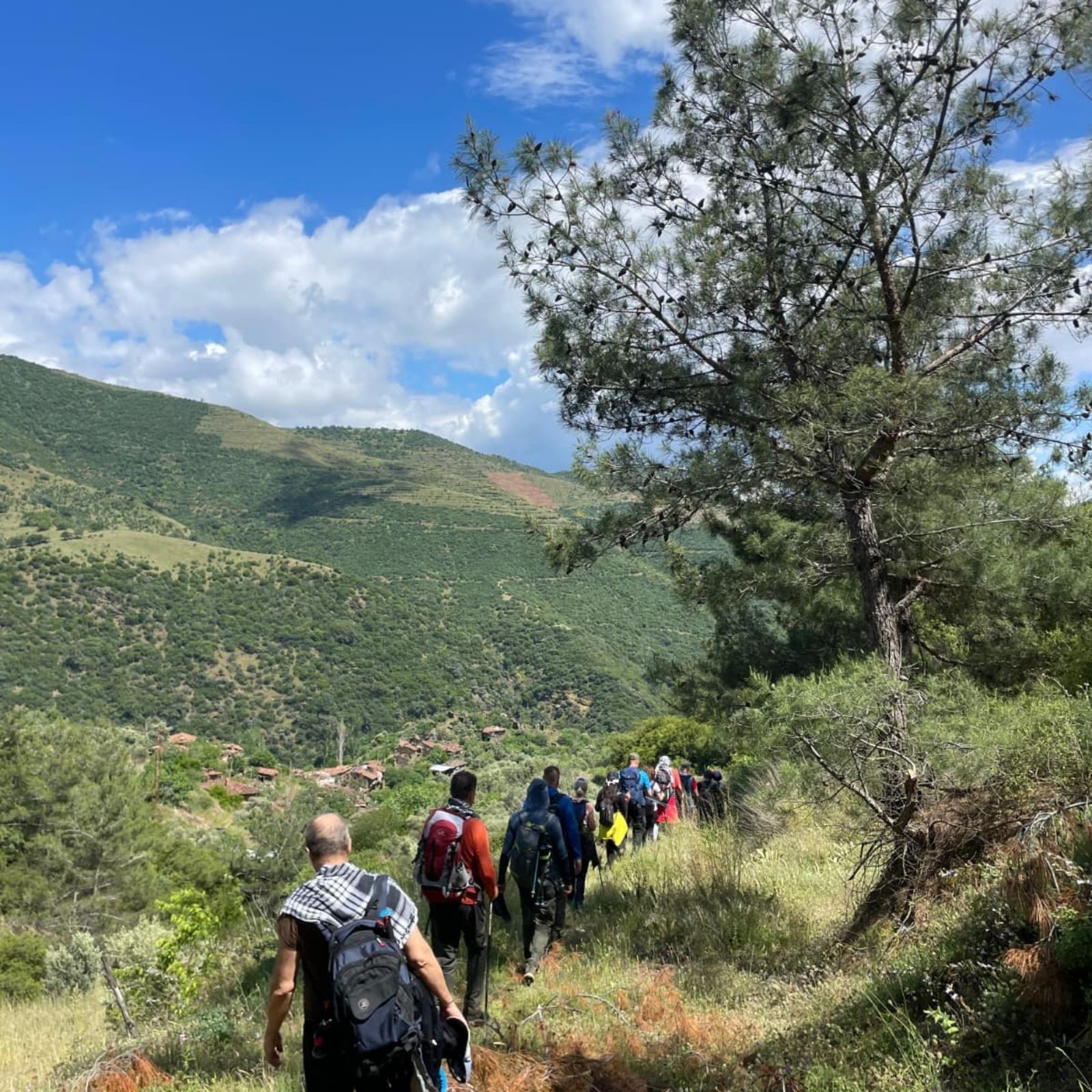
This is especially noticeable along cultural routes, where old roads continue beyond town boundaries. A street may gradually become a village lane, then an agricultural track and finally a mountain path.
Walking allows the traveller to experience this transition without interruption.
Slow Exploration Encourages Deeper Attention
Modern travel often creates pressure to see as much as possible. A day becomes crowded with locations, reservations and photographs. The traveller may visit many places without feeling truly present in any of them.
Walking offers a different rhythm.
It encourages us to spend longer in a smaller area and to notice how a place changes throughout the day. Morning streets may feel completely different in the evening. A quiet square may become lively when local families gather. Light may reveal architectural details that were invisible only hours earlier.
This form of exploration is not about covering less because we lack time. It is about experiencing more within the time we have.
By slowing down, attention becomes part of the journey.
How to Plan an Enjoyable City Walk
The most rewarding city walks combine a little preparation with enough freedom for spontaneous exploration.
Begin by identifying one or two places you genuinely want to see. Rather than connecting every major attraction, create a loose route through neighbourhoods, markets, historic streets or green spaces.
Consider the terrain as well as the distance. Old towns may include steep streets, uneven stones and long stairways. Comfortable footwear, water and suitable protection from the weather can make the day much more enjoyable.
A few practical preparations include:
- Downloading an offline map
- Checking museum and historic-site opening hours
- Carrying water and a lightweight weather layer
- Choosing comfortable walking shoes
- Allowing time for rest and unexpected stops
- Learning basic local greetings
- Marking public transport options for the return journey
Avoid planning every minute. A walking route should provide direction without eliminating discovery.
Look Up, Look Down and Occasionally Look Back
City walking rewards a wide field of attention.
Look up to notice upper floors, balconies, rooflines and decorative details often hidden above modern shopfronts. Look down for old paving, inscriptions, drainage channels and traces of earlier buildings. Look through open passages where appropriate, as they may reveal courtyards and gardens.
Occasionally, look back.
A street can appear completely different from the opposite direction. A tower hidden during the climb may suddenly rise above the rooftops. A view that seemed ordinary while approaching may reveal the structure of an entire neighbourhood once you turn around.
The art of exploring cities by foot is partly the art of noticing.
Respect the Place You Are Exploring
Walking provides close access to neighbourhoods, but closeness brings responsibility.
Keep noise low in residential areas, avoid blocking entrances and respect signs indicating private property. Dress appropriately when visiting religious or culturally significant places. If photography is restricted, accept the limitation.
Supporting independent cafés, local guides, craftspeople and small shops can also help ensure that tourism contributes to the communities being visited.
A city should not be treated as a background designed for photographs. It is a shared environment shaped by the people who live and work there.
Responsible walking begins with remembering that we are guests.
Rediscovering the Meaning of Distance
When travelling quickly, distance becomes an inconvenience to eliminate. On foot, it becomes part of the experience.
A kilometre may contain a market, an old neighbourhood, several architectural periods and dozens of small human stories. Walking reminds us that places are not isolated points. They are connected by streets, landscapes and the lives moving between them.
By the end of a day on foot, we have not only seen the city. We have begun to understand its scale. We know where the streets rise, where the light changes and how one neighbourhood slowly becomes another.
This knowledge is physical as well as visual. It remains in memory differently from a route experienced through a window.
Every City Has a Walking Story
The joy of exploring cities by foot does not depend on finding a secret place unknown to everyone else. It comes from developing a more attentive relationship with wherever we are.
Even a well-known city can feel new when approached slowly. Familiar landmarks gain context. Ordinary streets become meaningful. The spaces between destinations begin to matter as much as the destinations themselves.
Walking invites us to exchange speed for attention and fixed itineraries for curiosity. It allows history, architecture, landscape and daily life to appear within a single journey.
The next time you arrive in a city, choose a direction and begin with a simple walk. Leave enough space in the day to follow a street without knowing exactly where it leads.
The city may not reveal everything—but it will almost certainly show you something that cannot be seen any other way.